
Vietnam’s Hidden Underground Palace: Discover the Newly Found Cave in Phong Nha-Ke Bang National Park
Hidden beneath the jungles of Phong Nha-Ke Bang National Park, Vietnam's newly discovered cave reveals towering stalactites, rare cave pearls, and one of Southeast Asia's most exciting natural discoveries.
A New Wonder Beneath Vietnam's Ancient Mountains
Vietnam has long been celebrated for its breathtaking landscapes. Travelers from around the world come to admire the emerald waters of Ha Long Bay, wander through the lantern-lit streets of Hoi An, or ride motorbikes across the dramatic mountain passes of the north. Yet beneath the limestone mountains of central Vietnam lies another world entirely—one that remains largely hidden from view.
Nestled within the UNESCO-listed Phong Nha-Ke Bang National Park, a remarkable new cave has recently captured the attention of geologists, conservationists, and adventure enthusiasts alike. Hidden beneath dense tropical rainforest and concealed for thousands—perhaps even millions—of years, the cave has revealed spectacular chambers filled with towering stalactites, colossal stalagmites, and one of nature's rarest geological treasures: cave pearls.
For travelers seeking destinations beyond the ordinary, this discovery is another reminder that Vietnam still holds countless secrets waiting to be explored.
Source: Collected
Phong Nha-Ke Bang: Vietnam's Kingdom of Caves
Located in Quang Tri Province in central Vietnam, Phong Nha-Ke Bang National Park is often described as one of the world's greatest cave destinations. Covering more than 123,000 hectares of ancient limestone karst landscapes, the park protects one of Asia's oldest geological formations, dating back nearly 400 million years.
Over hundreds of millions of years, underground rivers carved an intricate labyrinth beneath these mountains, creating hundreds of caves, sinkholes, rivers, and vast underground chambers. Scientists believe that many sections of the park remain unexplored, meaning new discoveries continue to emerge even today.
The park first gained worldwide fame after the discovery of Son Doong Cave, officially recognized as the largest cave on Earth. Since then, explorers have uncovered an astonishing collection of underground wonders, including Paradise Cave, Hang En, Dark Cave, and countless smaller cave systems hidden deep inside the jungle.
The newly discovered cave now joins this extraordinary family, offering another glimpse into the mysterious underground landscape that makes Phong Nha-Ke Bang unlike anywhere else on Earth.
The Discovery That Excited the Scientific Community
Unlike famous tourist caves equipped with boardwalks and lighting systems, this newly discovered cave remained completely untouched by human activity until recently.
Hidden behind dense forest vegetation, its entrance was so well concealed that it escaped attention for generations. Only after careful exploration by local experts and cave specialists was its vast interior finally revealed.
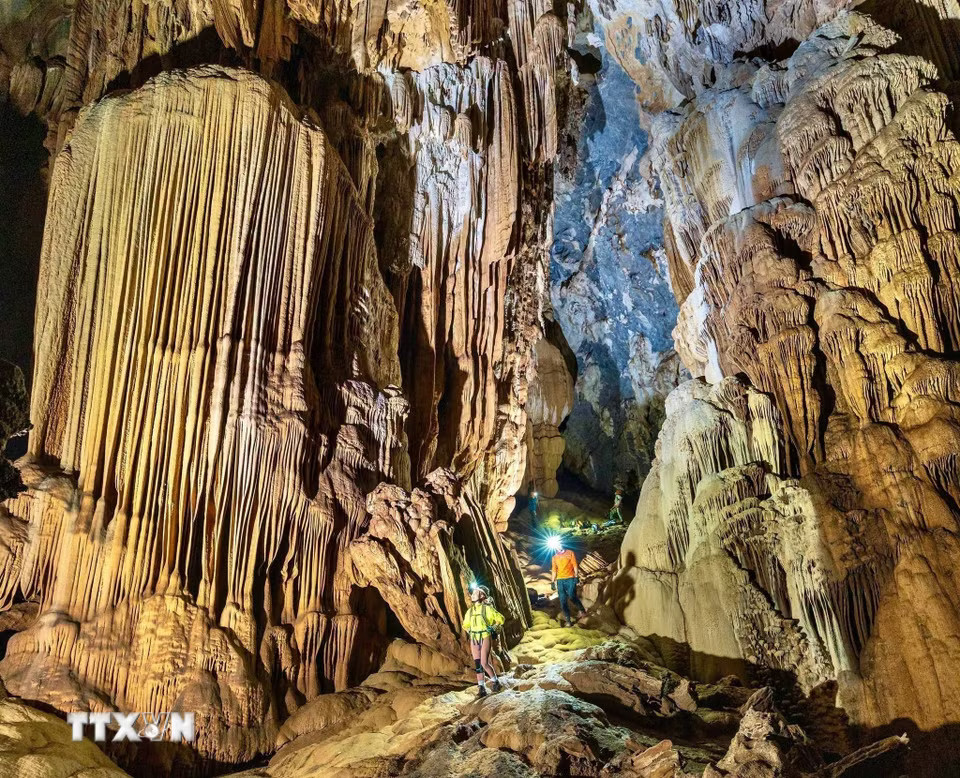
As explorers ventured deeper inside, they found chamber after chamber decorated with extraordinary limestone formations. Massive columns appeared to support enormous cathedral-like ceilings, while delicate mineral formations sparkled under the light of headlamps.
Every step revealed a landscape sculpted patiently by nature over millions of years.
For scientists, discoveries like this are exceptionally valuable. Undisturbed caves preserve geological records that help researchers understand ancient climates, underground water systems, and the evolution of karst landscapes throughout Southeast Asia.
Source: Collected
A Palace Built by Nature
What immediately impressed the exploration team was the incredible scale of the cave.
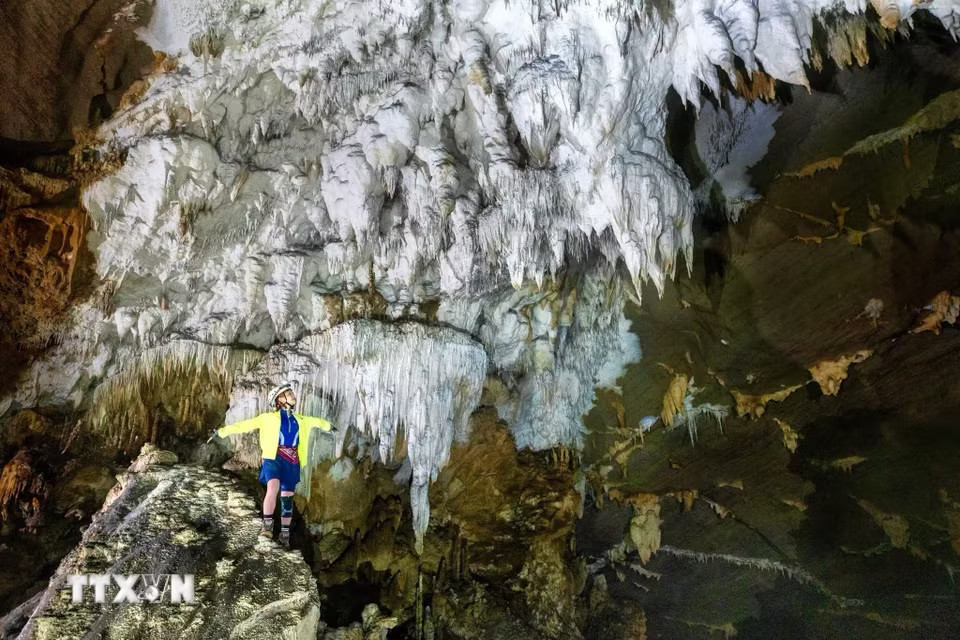
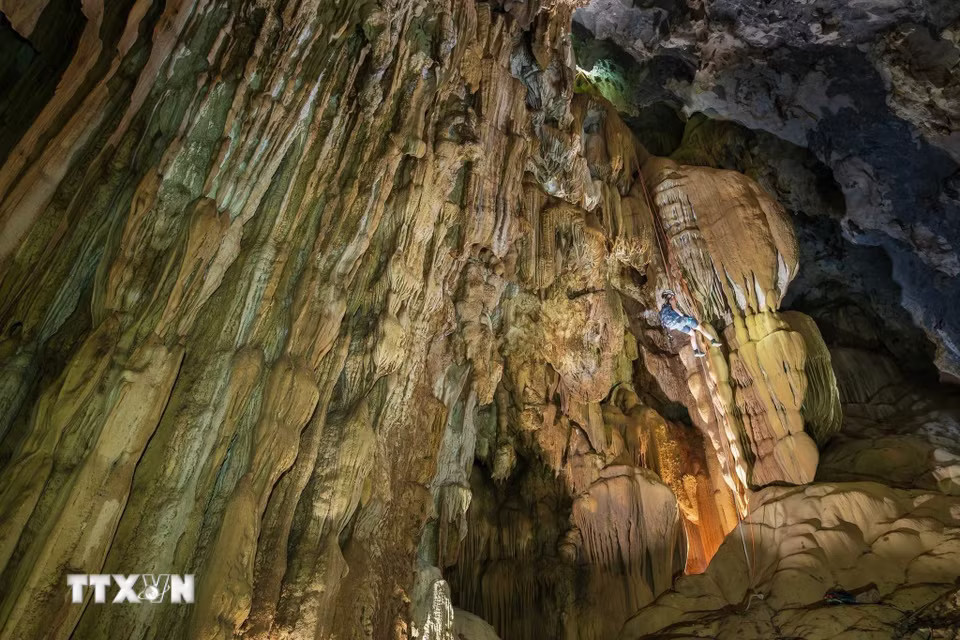
Some chambers soar nearly 50 meters high, creating immense underground spaces that feel almost impossible to comprehend. Instead of smooth rock walls, visitors encounter thousands of spectacular formations created by dripping mineral-rich water over immense periods of time.
Towering stalactites descend gracefully from the ceiling like giant chandeliers, while stalagmites rise from the cave floor, some eventually joining together to form enormous limestone columns.
In several sections, the cave resembles a royal palace carved entirely by nature. Intricate curtains of calcite hang from the walls, flowstones shimmer under flashlight beams, and crystal formations reflect light in every direction.
Unlike man-made architecture, no two formations are identical. Every corner presents a unique masterpiece shaped drop by drop through geological time.
The silence inside only enhances the experience.
Apart from the occasional sound of water dripping from the ceiling, the cave remains astonishingly quiet—a peaceful environment that has remained unchanged since long before humans ever entered.
One of the Cave's Rarest Treasures: Cave Pearls
Among all the extraordinary discoveries inside, perhaps none are as fascinating as the presence of cave pearls.
Despite their name, cave pearls are not produced by oysters. Instead, they are formed when tiny grains of sand or fragments of rock become coated by layers of calcium carbonate as mineral-rich water continuously drips onto them.
Over hundreds or even thousands of years, these tiny spheres slowly rotate within shallow pools, allowing smooth concentric layers to build evenly around their surface.
The result is a collection of perfectly rounded mineral spheres that resemble natural pearls.
Cave pearls are considered exceptionally rare because they require a very precise combination of geological conditions. Many famous caves around the world contain spectacular stalactites and stalagmites, but only a relatively small number produce cave pearls.
Their presence inside this newly discovered Vietnamese cave significantly increases its scientific importance and highlights the exceptional environmental stability that has existed here for countless centuries.
Researchers are now carefully documenting these formations while emphasizing the need for strict conservation measures to prevent accidental damage.
Source: Collected
An Adventure Before the Adventure
Reaching the cave is an experience in itself.
Unlike popular attractions that can be accessed by road, the journey begins deep inside the tropical forests of Phong Nha-Ke Bang National Park via Phong Nha Cave & DMZ 4 days 3 nights. Explorers must hike through dense jungle, cross clear mountain streams, navigate rocky terrain, and follow narrow forest trails before finally arriving at the hidden entrance.
The surrounding rainforest is home to remarkable biodiversity, including rare birds, butterflies, ancient trees, and wildlife found nowhere else in Vietnam.
This sense of isolation is part of what makes the cave so special. Long before visitors step underground, they have already experienced one of Southeast Asia's most pristine natural environments.
It is a journey that rewards patience, curiosity, and a genuine appreciation for the wild.
Related Posts

.png)
.png)
.jpg)